Counter-Strike suffers from quiet ‘Rostermania’ period

Counter-Strike 2’s 2026 season will kick off with the start of BLAST Bounty on Tuesday, marking the end of Tier 1 Counter-Strike’s offseason.
Yet, looking at the roster lists for the event, you would be forgiven for thinking it was still 2025.
Often called ‘Rostermania,’ the offseason that has emerged between the Budapest Major and BLAST Bounty could more accurately be described as Rosterminia.
Few of the top teams have chosen to make changes in the offseason, with only three of the top 10 VRS rosters making four changes in total.
Those changes are:
- Spirit: -chopper -zweih; +zont1x +magixx
- Aurora: -jottAAA +soulfly
- The MongolZ: +cobrazera
While teams can change players at any time, offseasons represent the time of maximum opportunity for most rosters to change players with minimal disruption, and allowing preseason bootcamps to make sure the new additions are up to speed.
However, the stagnant nature of 2026 rosters show that few teams are making use of that inbuilt benefit of offseason signings.
It is a measure of this transfer period that Spirit’s changes are regarded as the boldest in Tier 1, despite Myroslav ‘zont1x’ Plakhotia and Boris ‘magixx’ Vorobiev returning from the bench, rather than being new signings.
Instead of new signings, Spirit are rearranging their deck chairs by making magixx IGL and restoring zont1x to the roster.
Yet, even if they are not fresh pieces, there is excitement there; excitement that Spirit’s roles will work better, that magixx may bring a less predictable style, especially on Spirit’s languishing T-sides.
Elsewhere, there is little excitement to be had. So what gives?
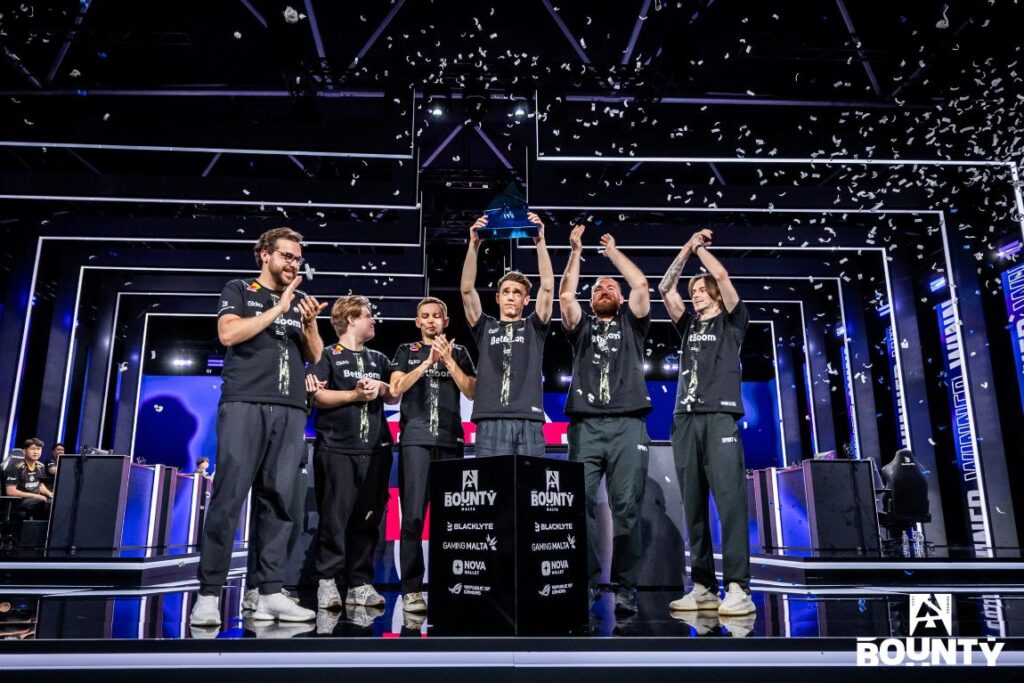
Why has the Counter-Strike offseason been so quiet?
On the HLTV Confirmed podcast, Vitality IGL, Dan ‘apEX’ Madesclaire noted that many of the top teams did seek to make changes during the offseason, but were not able to.
The four-time Major winner stated, “So many teams wanted to make changes, but they couldn’t. The market is crazy. The prices… CS, we don’t make enough money to make those changes. Orgs are crazy with prices.”
The Frenchman later went on to cite NaVi and Mouz as rosters as teams who wanted to make changes, but could not.
Simply put, there seemed to be little value in the market, meaning teams who desired a change are choosing to ‘run it back.’
While it is not known what numbers are being discussed, and whether they are larger than previous years, apEX’s statement seems to point to the idea that these transfer fees are rising.
If there are any inflatory aspects, a potential reason may be realisation of the value of rank in VRS. With cores especially demanding a premium, due to the ability of orgs to skip to Counter-Strike’s top table by purchasing a core.
BC.Game’s acquisition of SAW’s core is a recent example, with Team Spirit scout, Aleksei ‘OverDrive’ Birukov, claiming that BC.Game paid $2.5 million for the core.
Inreturn, the team is now (barely) situated in the top 24 of VRS, with an invitation to IEM Krakow. While it gives the org access to a huge increase in viewership and potential prize money, it is also a fragile benefit as they could easily fall out of the invite cycle after a few bad events.
In that context, the decision of 100 Thieves to build an entirely new core, presumably for much less money, could be argued to be the less risky one.
With the stakes of falling out of Tier 1 competitions so high, it seems that this offseason is more of a defensive than an aggressive one. A sort of Mexican stand-off, where someone has to pay up enough to alleviate anxieties around the risks involved. Yet no one has.
Without a big-spender like Falcons to trigger the avalanche, without a starting reverberation, it seems that teams have fought out a stalemate of negotiation in the offseason. Most teams want a move, but they don’t need it, so nothing happens.
Such an outcome is, in my view, a net negative for the scene, as the same teams fighting it out for the second year in a row is unlikely to spark as much interest as a dynamic window.
Yet, organisations have to fight for their own interests. The risk of their own roster becoming stale and toxic may not be enough to overcome the huge numbers involved in securing transfers in 2026.

Stay Updated with the Latest News
Get the most important stories delivered straight to your Google News feed — timely and reliable

From breaking news and in-depth match analysis to exclusive interviews and behind-the-scenes content, we bring you the stories that shape the esports scene.
Monthly Visitors
User Satisfaction
Years experience
Latest Counter-Strike 2
Trending Stories
More to explore